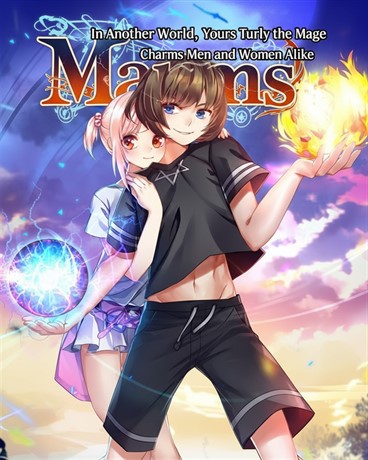
After seeing Jessica off, Emily dropped her guard. She sat beside me, plucked off my mask, and leaned in with a mischievous grin. "That woman’s so clueless. She didn’t realize Sister Rylin’s actually a girl. She even thought we were in *that* kind of relationship."
"Well, isn’t that fine?" I replied. "I don’t want unnecessary trouble because of my face."
"Right, Sister Rylin—you’re not from our country, are you? I remember when we first met, your Imperial Common Speech was still rough."
"Me? I grew up in a remote fishing village. Months ago, an old Archmage passing by discovered my magical aptitude and took me as his apprentice. I trained under him until he suddenly left, telling me to travel and gain experience alone. That’s when I found you surrounded by bandits after leaving Moonlight Forest."
My story wouldn’t hold up under the Mages Association’s scrutiny, but it fooled the girl before me. Emily’s eyes lit with realization. "No wonder Sister knows so little about common things! But you’re incredibly lucky—magical aptitude is one in ten thousand."
Indeed, here, having magical aptitude was as rare as winning the lottery. Only about one in thirty thousand possessed it. It was an innate trait, the absolute prerequisite for magic. Without it, one could never touch magic in their life.
"What about you, Emily? Do you know anything about your parents?"
She shook her head, a shadow of sadness in her eyes. "I’ve been in the orphanage since I can remember. The matron said I was abandoned on the street right after birth."
"Then… was life there hard?"
"Hmm… the matron was kind, but funds were always tight. When food prices rose, we went hungry daily. I’m grateful to my foster father—even if he didn’t treat me like a real daughter, I could eat my fill after that."
On this welfare-less, low-productivity continent, hunger and poverty plagued many year-round. For them, eating full regularly was true happiness.
Next came a leisurely afternoon of reading and tea. Emily and I each claimed a sofa, books in hand. Freshly brewed tea steamed on the table as we chatted. I’d heard nobles often spent afternoons just like this.
Though we hadn’t known each other long, Emily already saw me as her closest confidante. She chattered about her past—the handsome, gentle boy at the orphanage, the shy guy she met at last year’s banquet. She even asked bluntly about personal female issues: how to handle certain pains, itches, and normal menstrual cycles. I grew terribly embarrassed, but she just laughed at my shyness.
I was reading *A Brief History of Alchemy*. After all, I’d meet a Master Alchemist tomorrow night—better to be prepared. The Alchemists Guild was also renowned here. Though less famous than the Mages Association, their products had far wider impact.
Most alchemy required no magic, so alchemists vastly outnumbered Mages. Yet most remained low-level their whole lives. Advanced alchemical products needed magical modulation—only Mages could become Master Alchemists.
Think of it this way: an alchemist without aptitude was like someone starting work after junior high. One with aptitude? Like a top-university PhD graduate. Their starting points differed hugely, and so did their achievements.
Tomorrow’s Cavendish wasn’t just a Master Alchemist—he was also a Level 6 Mage. With the Alchemists Guild and Mages Association so tightly linked—even the Guild Master was one of the Association’s seven councilors—my Mage identity would be crucial for the meeting.
Before I knew it, deep night fell. Nights here were dull. Nobles might light castles with candles for banquets; mercenaries drank all night in taverns. But ordinary folks slept early—candles and oil lamps were costly luxuries.
In my bedroom, Emily lit an oil lamp by my bedside. "Sister Rylin, don’t stay up late," she said softly. "Your skin will suffer."
"Mm, you head to bed early too."
This lamp oil came from large sea beasts’ blubber. East of Saxton City lay the port, where hunters sailed daily. It was high-risk work—fierce storms and vicious sea beasts claimed countless lives. That’s why oil prices stayed high. Commoners could only afford candles.
After Emily left, I pulled all my gold coins from my spatial ring. Only twelve remained. A fortune for commoners, but a Master Alchemist wouldn’t blink at it. Mages could earn well, but jobs were either time-consuming or dangerous. They say money makes ghosts push millstones—but without it, would ghosts push *you* over?
Ah well. No use worrying. Time to sleep…