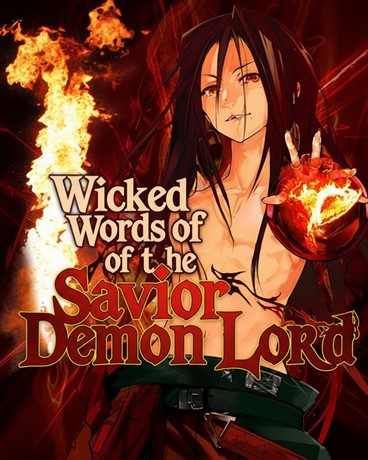
Night Watcher—
—Dulan, wake up, wake up. Your worth is battle, like steel meant for storm. But if your blade can’t bring victory home, what use is cold iron?
…Even if you beat ten of me, it proves nothing. I, Vega, sell the image of a delicate beauty, like silk in snow. My weakness is my edge. Who else can make that work?
So listen close, Dulan. This opponent is strong, like a mountain under thunder. Yes—world-toppling strong.
The Night Watcher is chosen by the stars, the destined savior, the most holy son. Saving the world is his duty and his fate, like a river bound for the sea.
He was born into a world that should’ve been the “official history,” a branch with one peculiar bud of possibility.
At the beginning, everything looked normal, like a dawn without wind—
God—not any god you know, but another, still a maker of worlds—offered His firstborn to mankind. Out of love, He wanted His child to name right and wrong, to bring peace and joy, and to lift salvation like a lantern over the earth.
But in all the worlds, one sliver of possibility came true. God’s Firstborn was swayed by a fallen archangel, the King of Pride crowned in glory, like sunlight on a blade. They argued about what should be saved—man or monster—and whether fools who kneel to force, never to sanctity, deserve rescue like rain on rock. They questioned whether God is fair to all, to every creature under the sky, and why He favors the One alone, like a hand on a single seed.
It was a dazzling debate, a firework over the ocean of histories, unmatched across countless worlds. In the end, the Firstborn fell silent, like ash after flame. He didn’t add to his Father’s glory. He conceded the logic and spine of the King of Pride.
This was tragedy in a new key. The Firstborn turned from his Father because he judged God unjust, unable to save this age, like a shepherd who lost the trail. The Firstborn’s value was to “save the world.” He walked among men by his own will—his human side as helm—and he denied the cold of “divinity,” raising rebellion like a black banner in noon light.
He decided to destroy his Father’s lambs. He saw no self-rising in those lambs—only beasts of darkness, whose minds seemed more ripe with possibility, like roots gripping deeper soil.
He said:
“Do ugly monsters have no claim to salvation, like stars with dust on them?”
“Do things born of evil have no shard of turning toward the good, like frost melting on a bud?”
“If only one side can remain in this world, who has the right to decide? Do I? Does my Father? Who holds that scale like steady hands?”
“Everyone, every monster fights with all they have, like swimmers against the current. What’s the difference between their struggle?”
“Is it only because—you call light good, like gold without shadow?”
“My Father, my merciful Father.”
“You asked me to save mankind. Then I will. I must save them, even if my path breaks with Yours, like a river tearing its own banks.”
“Between two sides, I’ll throw myself into the dark. I’ll raise a rebel flag against the sun’s tyranny, because—”
“—it’s more fair. More just.”
So the Firstborn became the Dark-Eaten White Moon, a pale disc rimmed with rot, seeking to swallow the Great Light, to snuff the sun and let an age of night fall like snow. It’s a story about how even God’s child can rebel, like a spark refusing the lamp—but it’s not our focus now, so we’ll set right and wrong aside like stones by the road.
—Dulan? Good. Still awake like eyes under frost.
Now comes our protagonist, the Night Watcher at hand. He’s God’s second son, the second child given to mankind, like a candle after a storm.
He arrived in a bleak era, with human civilization on the brink of ruin, like cliffs under waves. And worse, a new calamity stood ahead—his elder brother.
God gave him three mandates, carved like runes in wind.
First, with human words, drive the devil’s wandering masks from the world, like smoke pushed from a room.
Second, with firelight, burn the fallen archangel—the King of Pride of that day—like wings turned to ash.
Third, with a long sword, hew down the Dark-Eaten White Moon in the sky, and return the Great Light to mankind, like dawn breaking a siege.
The Night Watcher took a higher counsel—advice from the Supreme—and forged thought into speech, like thunder made into drums. By language alone, he drove the devil from this world. Then, with the Requiem Lantern and the crossblade born with him into life, he breathed flame, burned the King of Pride’s black wings, wrenched the sword from his chest, and struck off his head, like a guillotine under eclipse.
But he was late, a heartbeat late. While the King of Pride held him fast like chains in tar, the Firstborn, the Dark-Eaten White Moon, swallowed the sun. The world stopped belonging to men. It became a country of monsters and beasts, ugly as briars in winter.
The Night Watcher never took back the Great Light, never reclaimed mankind’s grand age, like a door locked from the other side. He missed one step, and that became forever. The Great One’s blood and soul let him endure in the black era, like embers under snow. But in that dead, ink-dark world, the only thing he could do, the only thing he planned to do, was keep the last humans company, grim and quiet, until the end, like a watchman counting the final stars.
After the last human died, the Night Watcher kneeled. He cut his own throat like a red line on white stone. Of the five failed heroes summoned this time, he alone chose self-slaughter.
All told, it was a great victory for darkness, like a tide swallowing the pier. —Ahem. Story’s done. The important details aren’t. Hey, still listening? Good. Stay tuned like a string under bow.
Let me lay out the Night Watcher himself. He now has only one crossblade. The Requiem Lantern burned out when he put down the King of Pride. Don’t underestimate his ranged reach—his crossblade was forged to cleave the Dark-Eaten White Moon, like lightning made into steel.
Treat this Night Watcher as a hero in the same tier of power as the Son of the Demon King, like peaks under the same sky.
In God’s hand are Seven Miracles, given to His children to show proof of the Divine Being, like seals pressed into wax. Thankfully, each miracle can be used only once by the holy son.
As the Master said, the miracles shown to mankind are the last miracles the world ever sees, so each is a single stroke. The Night Watcher, a warrior born, still kept that law. Even stronger than his brother, he fought long wars. He spent miracles for men and for himself—“Healing,” “Something from Nothing,” “Time’s Rewind,” and others—like coins thrown into fate’s river. He should have only one miracle left now: “Return from Death.”
Which means you must kill him twice, at least, like felling a tree and cutting the stump.
Mark this, and—let me think—yes. His rank is high. You can’t swarm him with lesser thralls like ants on stone. Only those with the right to slay gods have the right to challenge him. Mid-tier thralls won’t help you, even if I lend them, like sand against a storm.
You ask what is the “right to slay gods”? In futures yet to come, mankind summarized the credentials for facing a Divine Being. First, a body forged to completion, like iron without crack. Second, the resolve to face fear of death head-on, like eyes in winter wind. Third, a will that carries belief to the end, like a river cutting a canyon. Achieve at least one of the three, and you have the right to challenge. Only to challenge.
That’s right, Dulan. This time you’re the challenger—challenging myth, challenging the destined savior, like a hawk against the sun. Fun, isn’t it?
If you insist on asking what else makes him special… I’m stuck. Imagine every human quality raised to the limit, like a statue without flaw. What do I introduce then? Should I outline his weakness? A thing like that—destined hero—has no weakness by reason’s measure, like a circle without edge.
He’s a complete man. From soul to strength, he’s whole, like water without crack.
Oh—wait. That gives us a seam.
There’s one thing to use.
Dulan, before the fight, say one line to him: “Humanity doesn’t need you anymore.”
Just that line. Yes, only one. No extra words, no loaded tone. Simple and plain, like fog over a river. Sometimes one sentence lingers like incense in a hall, and that haze reaches the most fragile place in a heart.
Also, you’re dense. You probably won’t remember all I say, like notes blown from a porch.
I can’t promise it works. Hey, I’m not the all-knowing Great One. I don’t even know how strong you get when you’re fully in the zone, like thunder waking in bone. I can only pass on the Master’s instructions and—my small deduction, like tracing tracks in dust.
I’ll rip open the Night Watcher’s old scar, like peeling a scab. I hope he falls into a mud of self-loathing and despair, unable to draw his full power. That’s how small-time villains like us win. Not all of us can be like the Master, a proper grand antagonist, like a cliff over a storm.
That’s it. That’s all.
A blessing—yes, a blessing. I sincerely hope you don’t take him lightly. Go all in, like flame in dry grass. Otherwise, there’s a real chance you’ll lose your head in one breath, like a leaf cut by wind.
Go. We’ve spent too long on the briefing. Go meet your enemy, like a runner at the bell.
…Well, look at that. Dulan’s eyes can still turn that sharp, like knives in dusk. Haven’t seen it in ages…