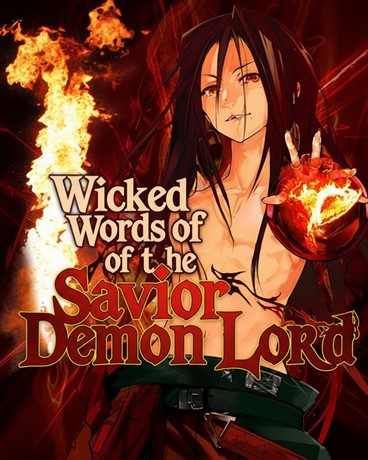
Maki sat at the innermost curve of the round table, like a stone at a well’s bottom, listening and pushing back every word.
He was Chairman of the Heretic Inquisition, a cold lantern in the fog, and when trials ran aground in dispute, the Nine Elders and the Chairman argued like clashing oars.
He stood opposite every view, a whetstone to each blade, pointing out gaps like cracks spreading on winter ice.
Thus, when the Elders’ storm passed, the room could settle like silt, and a rough consensus would surface.
“My opinion: execution,” said a man of seventy winters, voice like dry wood. “Knowing true evil, yet choosing to shelter it—such a man is worse than the villains he shields.”
“State your reason, First Elder,” Maki said, his tone level as a still pond.
“For one like Andor,” the First Elder replied, eyes hard as flint, “his twist isn’t a mistake about reason and righteousness, but a torch held to wrong he already knows.”
“No logic or disputation can turn him,” his voice struck like iron. “He shouldn’t live; yes, he’s a Hero, but his influence is a wildfire that can’t be left burning.”
“I will state my rebuttal,” Maki said, voice cool as rain. “Andor is a complete mind; he sheltered for the one he loves, like a man holding a lantern over one face.”
“At the Academy, he pursued Raven, steady as a river toward the sea. If it’s done in the name of love, can this be forgiven?”
“No,” the First Elder answered, the word like a door slamming. “Choosing evil because you have a reason is poison brewed with intent.”
“He failed to be a model Hero, a beacon on a night road,” he added, gaze sharp as a spear. “The world needs Heroes, not Heroes who lead us into an abyss.”
“Objection,” said a boy of fifteen or sixteen, hand raised like a sapling reaching light.
“State your reason, Eighth Elder,” Maki said, his look steady as a pillar.
“First Elder, note this,” the youth said, breath quick as a colt. “Andor is eighteen, just come of age; hot-blood beats like drums in spring.”
“Shouldn’t we allow for his stubborn love?” his voice softened like thawing frost. “Was it a moment’s mistake or a lifelong stain? That’s what we should discuss.”
“I’ll state my rebuttal,” Maki said, words clear as bell chimes. “My inquiry shows Andor’s self is strong, like an oak against wind.”
“He feels no repentance; he calls sheltering evil a wrong, yet says he’d choose it again,” the words fell like pebbles. “Can we still claim he’ll mature?”
“We can,” the youth answered, hope like a small flame. “He admits it’s wrong, which means a knot already tightens in his chest.”
“We hardly need to point out right and wrong to him,” he continued, voice like a path into dusk. “A Hero who sees life and death will learn what to hold like a sword.”
“Objection,” said a scarred middle-aged man, his tone weathered as old bark.
“State your reason, Fifth Elder,” Maki said, gaze cool as moonlight.
“Twenty-four Demon Kings have descended,” the Fifth Elder intoned, like thunder over stone. “The sky is too dark for mistakes, not even a spark.”
“Eighth Elder, you can’t prove Andor will become a finished man,” he said, words like a drawn bow. “With his talent, he could be a great Hero or a great villain; we can’t gamble the earth.”
Maki was about to speak, but a young man cut in, like a hawk diving through clear air.
“Objection! Because the sky is dark, we can’t lose Heroes to our own iron cage,” he cried, voice ringing like steel. “Andor was chosen by the Hero Stini.”
“He’s slain and driven back Demon Kings more than once,” the words strode like soldiers. “Merit like banners in the wind.”
Another, a fishfolk with finned ears, thrust in as if from a wave.
“Objection! Nagash has equal, even greater merit,” he said, voice wet as surf. “Didn’t we still decide to hunt him down like a storming pack?”
“I agree with the Fifth Elder,” he added, hands cutting the air like fins. “We can’t stake the world on a throw of dice.”
“Objection!” another cried, grief like rain on stone. “Endless battle wears a Hero’s heart thin, like leather under sand.”
“We should be lenient, even if faults flicker like moths,” he said, shoulders heavy as night. “We judge by higher merit, not a single stain.”
“Objection!” a voice snapped, sharp as frost. “Is that the model we show the world, Sixth Elder?”
“Andor’s sin can’t be a story parents tell with pride to children,” it cut like wind. “If such sin becomes an idol and a song, the Heretic Inquisition is disgraced.”
“Objection!” came another call, rough as gravel. “The twenty-four Demon Kings won’t fall in a day; our front will be measured in years like tree rings.”
“Heroes may suffer spiritual taint,” he said, eyes shadowed like caves. “Do we punish our own before we’ve cleansed the enemy?”
“They’re tainted for the world’s sake,” he pressed, voice hoarse as crows. “Do we cast them aside like broken spears?”
“Objection! Second Elder, that’s not our topic,” a voice cracked like ice. “Andor sheltered by plan, clean-minded, not due to taint.”
“Objection! That’s exactly my point,” the reply came hot as coals. “If we judge Andor, how will other Heroes think?”
“Loosen the measure like slackening a bowstring,” he urged, words quick as sparks. “Don’t make them bleed and then weep.”
“Objection!” another voice boomed, like a drum in a canyon. “This is only the war’s dawn; if we can’t bind right and wrong now, hearts will warp worse by dusk.”
“Objection!” a calmer tone answered, clear as a flute. “We should explain to the people, like laying out maps.”
“About Raven, about the Truth Seekers Assembly,” she said, palms open like pages. “Andor saw one slice of the moon and chose from a partial view.”
“Objection! Sixth Elder, remember this,” a voice cooled like iron in water. “The Heretic Inquisition does not explain.”
“We bring fear of evil, like night brings silence,” he warned, gaze black as pitch. “Too much clarity, and fear thins like mist.”
“Objection! Colonna asks we spare Andor,” someone shot back, the name like a banner. “Gloria had a magitech implant forced in; we need Andor to explain it.”
“Objection! …” Voices rose and fell like waves in a storm.
“Objection! …” The echoes tangled like vines climbing a wall.
Since that first rupture, Maki had watched in silence, his calm a pool under rain, as the Elders’ quarrel grew wild and tangled.
He let it spiral, like smoke from a burning field, until it yielded nothing but heat and ash, a Dispute without harvest.
Usually, he would punish the one who broke the agreed order, like trimming a crooked branch, and bring the talk back to a straight path.
But this time—
Maki looked toward the doorway, eyes steady as lanterns set for the dead.
He wanted the one beyond the door to hear the Elders’ voices, like hearing wind in rafters, to hear this disharmony.
And to hear his own future, like a bell tolling beyond fog.
He also held a wish like a small lamp, that without him the debate would right itself and flow like a riverbed.
So he waited in quiet, breath even as night rain. But what he saw disappointed him like frost on spring buds.
The Elders still quarreled, ugly as mud slung at a shrine, their words spilled without thought like grain scattered by a frightened hand.
Too ugly, he thought, the taste bitter as ash on the tongue.
We should speak to seek reason and righteousness, like travelers asking the road, not argue for the sake of argument.
Or we leave only a hollow act, an empty rite named “Dispute,” like beating a drum with no skin.
At last, Maki spoke, his voice a blade drawn in a silent hall.
“Enough, all of you,” he said, cold as river stone. “Aren’t you ashamed? Where is your wisdom, your reason? Has heart-fire burned it all to cinders?”
Even with tempers at full flame, his words fell like snow, and the room went still.
“Fourth Elder,” he said, gaze like a measuring line, “you stooped to insult, striking the person, not the point. Your righteousness tilted like a crooked beam.”
“Go to the Dawnlight Gaol and contemplate three days,” he ordered, the sentence like a seal.
“Second Elder,” his voice did not waver, a bell at dusk, “your words were a thicket of repeats. Where was your thought, clear as a stream?”
“Go to the Dawnlight Gaol and contemplate three days,” he said, the command landing like a stone.
“Eighth Elder,” he turned, his look a clean mirror, “whom are you defending—justice, equity, or order? Choose one, fix it like a nail, then speak.”
“You are lost in fog,” he finished, quiet as snowfall. “Go to the Dawnlight Gaol and contemplate three days.”
“Ninth Elder,” he said, soft as a reed but unbending, “why do you hesitate? Whose face are you afraid to thin, like rice porridge with too much water?”
“We chose you not to hear flattery like incense smoke,” he added, the air sharp as pine. “Go now, to the Dawnlight Gaol, three days.”
“The debate ends here,” Maki said, closing the book like a palm. “Each of you holds your own banner; we won’t reach a verdict.”
“There’s no need to say more,” he added, voice even as dusk light. “Dismiss.”
The Elders bristled with leftover heat, like coals under ash; some wanted an answer like a blade, others still played the game of louder thunder.
Maki frowned, barely, a shadow crossing water.
In the end, they obeyed him, one by one leaving like birds lifting from a field.
Only when all had gone did Maki rise from his seat, a mountain moving with quiet steps, and walk through the empty hall toward the doors like gates of a temple.
He asked the youth outside, his voice steady as a plumb line, “Andor, did you see?”
“See what?” the boy said, leaning against the wall like a lazy cat, interest thin as smoke.
“That’s what I wanted to hear,” Maki answered, a small smile like a crescent moon. “Say it. Jest or blunt truth, speak.”
He didn’t mind the boy’s posture, a slant like grass in wind; he had seen thought glint in those black eyes, quick as fish in deep water.
He must have listened, and listened with his heart, like a hand held to a brazier.