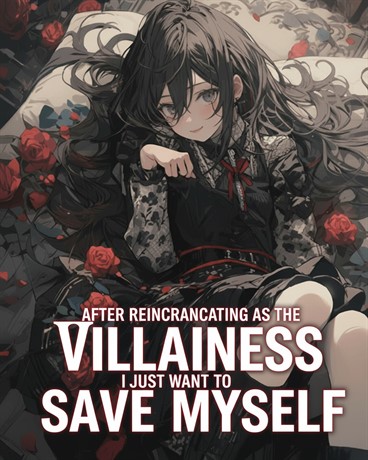
“Hss… that hurts.” A light touch, and Lucimia’s slender body shivered like a willow in cold wind.
She peeled back the inner lining of her clothes. Blood had drenched the fabric, browning like rusted leaves over time.
“Hope it didn’t reach the lung.” The worry rose first, her voice a small murmur in its shadow.
She drew two deep breaths, slow as tide. No new pain bloomed anywhere else.
“Should be fine… sigh.” Her breath fell, like a tired bird settling.
Lucimia set herself to tending the wound, calm as moonlight over a dark pond.
What? You ask why she didn’t use Healing Magic? The question flickered like a moth at a lamp.
This world has its quirks, like stones hidden under clear water.
Healing Magic isn’t written into spellbooks. A handful of archmagi hoard what little they have, and they don’t share it. Even brewing a healing potion needs their spells, so mages who can heal are rarer than rain in drought.
You think that’s foolish? Not entirely. The need is a thin stream, not a flood.
Why? Because when people fall ill, they go to the church, as swallows return to eaves.
A cough or a cold— a priest lifts a hand and uses the Blessing of Purification. Illness fades like mist in sunlight. Healing Magic isn’t needed.
So Healing Magic shrank to a minor art, and few mages bothered to chase its tail.
There’s another tale in the wind: that mages were barred from studying healing, and even if they cracked it, the church banned its spread.
Lucimia didn’t know the truth. The path ahead was fog; the rumor behind was echo.
Was it that Purification made Healing Magic redundant, so no one specialized? Or that someone did, and the church feared losing its grip, so they shackled it?
No one knows. The answer drifted like smoke over a river.
There are simple hospitals too, where they wrap wounds and stop bleeding, plain as bread and salt.
Right now, Lucimia had no Healing Magic, no potion, and no priest with the Blessing of Purification in reach.
All she could do was simple bandaging, steady as a seamstress by lamplight.
She pulled a chair close and turned on the tap. Clear water ran over her shoulder, a silver stream to the cut.
Stinging flared, sharp as ice needles. Her brow folded, but the pain sat within the lines she could bear.
When the rinse felt enough, she pressed a clean cloth to draw off water and blood, patient as a baker with dough.
She took another clean cloth, wrapped it around her shoulder through the armpit, snug as a sash, and tied a neat bow.
“That should do, right?”
She stroked the white bandage, soft as petal on snow, and rose with care.
She lifted the shoulder, slow as dawn.
“Ah— hss.” Pain stabbed inward, a thorn to the heart. Blood gushed, the white turning scarlet and running along the edges like ink.
No good. The bleeding wouldn’t stop. First the flow, then the rest.
She untied the fresh bow and stripped the cloth, flicking it aside like a fallen leaf, and sat again.
How to stop it? The thought circled like a hawk in a thermal.
She pulled out several fresh cloths. Another rinse, another dry. She wrapped again, this time tight as a sailor’s rope, pressing hard for compression.
No bow now— she tied a dead knot, firm as iron.
Done, she stood and tested the arm with a small lift, careful as handling glass. Pain remained, a dull ember, but blood didn’t seep.
Good. That will do for now, like a dam holding.
She patted the bandaged spot, light as rain on linen.
Then she tended the smaller cuts with quick touches, and finally came the bath; after battle, washing is necessary, like a field needing rain.
Warm water poured from her crown, a soft river through reeds. Comfort uncoiled, and heat washed the fatigue away like waves scouring shore.
“Mm.” A small sound, like a lark in morning, slipped free.
She shut off the tap, wiped herself dry, changed into clean clothes, and stepped out of the bathhouse, fresh as spring.
Right, and the dirty clothes? How to handle them?
Forget it. She tucked them into her Storage Ring, a pocket sky. They were likely a lost cause anyway, torn in several places.
—
She lay on the bed.
Usually, Lucimia took the outer side and Yuna the inner. Tonight, they switched— Lucimia inside, Yuna outside, like stars changing lanes.
“Wh— why… like this?” Yuna’s worry fluttered like a moth.
“Because… I want to lie where Yuna usually lies.” Lucimia’s reply was gentle, like tea steam.
“A— alright.”
Truth was, she feared someone bumping her left shoulder. A jolt would yank a cry from her, and then Yuna would worry, like rain onto fresh paint.
Better to avoid needless trouble; peace is a brittle egg.
“So… what do we do next?” Yuna asked, voice small as a spring reed.
“Mm… next, we destroy the ritual. Then it should be fine.” Lucimia’s calm steadied like a lantern in wind.
“Oh, oh— Luci, sis— you worked hard.” Yuna’s praise was warm as bread.
“…No.” Lucimia grew shy, heat rising like blush. “Without your power, we’d be done.”
“Without Luci, sis, we’d be done too.” Yuna’s answer met hers like linked rings.
“Anyway— sleep. Tomorrow we study magic all day. At night, we start watching Bazeroth. The day after, we break the ritual. If the plan flows smooth, Elyssus won’t descend, and we’ll be safe.”
“Mm.” Yuna nodded lightly, a petal’s fall.
“Mm-hm.” Lucimia nodded hard, like a drumbeat.
—
Morning came quick, bright as a blade. Lucimia helped Yuna into her clothes, did a simple wash, then led her to the dining hall, hand in hand.
Father began talking about last night the moment they arrived, words rolling like stones. From him, she learned a soldier named Ritch had blocked the Dark Deity cultists’ plan. He planned to recommend Ritch to become a Holy Knight of the church.
That was the man’s wish, granted like rain to thirsty earth.
After hearing him, Lucimia felt a strange chill, a fishbone caught in thought. “Dark Deity cultists? Who?”
“No idea.” Alvis shook his head, slow as an old pine.
“Don’t know?” Lucimia’s confusion fogged up, because Ritch went with her to stop Cole. Cole was the soldiers’ captain— a bright badge— how could no one know? Didn’t Ritch tell?
“Did that soldier, Ritch, say who?” she pressed, steady as a needle.
“I asked. He said he didn’t know.” Alvis’s voice dipped like dusk. “He looked troubled, like he couldn’t remember. He said a ‘Co—’ and then nothing. When I urged him to think, he forgot the whole thread.” He laid out the details, clear as spilled beans.
What? The thought snapped, a twig underfoot. Ritch forgot? How?
Did he bang his head? How could he forget even who kicked him?
“Then… in the registry of residents or soldiers, is there any name with ‘Co’?” Her question cut clean, like a blade through silk.
“I cross-checked.” Alvis frowned, lines like bark. “No one has ‘Co’ in their name. I don’t know what Ritch is doing. He was badly hurt, maybe muddled.”
“…Oh.” Lucimia nodded and let the matter rest, like a net drawn in. Too much probing risks exposure; the water grows muddy.
Yet she was puzzled, a stone in a shoe. How could Ritch forget? Even who booted him— gone?
And Father checked the registry, and not a single ‘Co’? Impossible. Cole was someone Father himself promoted to captain.
Something’s wrong. Very wrong. The air felt off, like a room with no shadows.
Lucimia decided to ask Ritch herself later, face to face, like blade to whetstone.
Mm, and she’d fly out the window. If she went by the window, Miss Kaeli wouldn’t know she’d left. No eyes on her means bold words, bold moves, hawk with sky under wings.