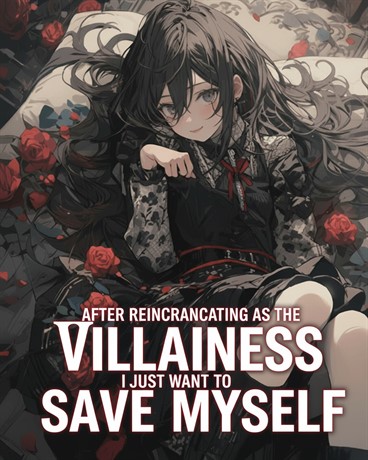
He died, like a candle pinched out by a passing draft.
Like any run-of-the-mill transmigrator, he staggered home after overtime, and a steel beast thundered through him like a tidal train.
As his awareness unraveled like smoke, he thought he heard the driver mutter, “Finally closed another order,” and, “This month’s numbers look good,” like coins clinking in a tin can.
Probably just auditory ghosts, like wind whispering through a cracked window.
In the next world, he opened his eyes as a girl born to nobility, a blossom transplanted into marble soil.
Her name was Lucimia Lancelot, a pearl set in the crest of the Lancelot Family.
Lucimia was the given name, Lancelot the banner in the hall, like a surname etched on a shield.
After two sons, the Lancelot Family finally welcomed a daughter, like spring rain after a long frost.
The Count’s joy burst like sunlight through storm clouds.
“My lord Count, here is this month’s report from the merchants,” the butler said, offering papers like a tray of winter bread.
“Haha, how’d you know I finally have a daughter?” The Count laughed, like a bell rung in a bright courtyard.
The butler blinked, baffled, like a cat staring at thunder.
A girl’s slim lines, ink-black hair, and eyes dark as a moonless well; her gaze held a cool hush, like frost glazing bamboo.
Her nose arched with a painter’s grace, a soft curve that made her features click into place like jade pieces.
Pale skin and a beautiful face drew people like moths to a lantern on a summer night.
Word spread that the Lancelot Family had birthed a beauty that bent reason, like a lotus blooming in snow.
At a noble soiree, men came to witness her face and stood struck dumb, like statues coated in moonlight.
Some young lords asked her to dance, hands out like branches seeking a breeze.
Some even blurted love, confessions tossed like pebbles into a deep lake.
Lucimia denied them all with a cool stare, like a winter mirror that holds no fingerprints.
Emotion first: disgust pricked like thorns; action next—she stepped back from men as from a hot stove.
In her past life she’d been a straight-up macho guy, a steel bar with no bend, and getting close to men now felt like chewing gravel.
So she cut them off with a fierce glare and a hint of scorn, like a sword drawn an inch from the scabbard.
They didn’t get angry; they liked it more, like spice that burns and begs another bite.
Her cool-toned face held a crooked charm, a northern light that pulled eyes like tides.
Some said even the succubi in the demon quarter couldn’t match her pull, like fireflies outshone by a lighthouse.
“An angel stepped down to earth,” people breathed, words floating like dandelion fluff.
Yet Lucimia didn’t buy it now; doubt pooled in her chest like ink spreading through water.
Last night she dreamed a strange dream, a lantern-lit alley that led somewhere wrong.
She sensed—maybe, possibly, could it be—that she was a Dark Deity, like thunder rumbling behind a closed door.
In the dream she stood at an altar, darkness pressed close like velvet curtains, and the altar rose high like a cliff.
Underfoot, a vast Magic Array sprawled like a red spiderweb carved into stone.
Above it lay a slab of bloody pork, a dead pig, crawling with white maggots like rice wriggling in a bowl gone bad.
No telling how long it had rotted, like a fruit forgotten in sun.
The pig’s legs stuck out, jaw gaped, and its eyes froze wide with fear, like glass marbles catching a scream.
Below, black-robed figures knelt like crows roosting, heads bowed into the night.
By her side stood a priestess dressed to bare skin, waist and navel and legs like a fever dream framed in lace.
The priestess prowled across the Magic Array in lingerie, hips swaying like reeds, dancing while singing a strange chant like wind threaded through bones.
The robed crowd joined in, every voice a woman’s, a chorus like a humming hive.
It looked exactly like a cult rite from a rumor, a dark theater with velvet drapes and hidden knives.
What is this, a lewd Dark Deity with a harem, like a tavern song turned into scripture?
Lucimia even wondered if the kneeling crowd wore similar things underneath, like embers under a layer of ash.
Awesome—no, awful, she corrected herself, a slap of cold water on a heated face.
After a while, the priestess fetched something from the side, arms curving like a crane lifting a bowl.
Lucimia focused and saw a wooden basin cradled in her left arm, sloshing with blood-red liquid like sunset melted down.
In her right hand she used a wooden beer mug, splashing the red onto the Magic Array like rain flicked from a branch.
The Magic Array met the liquid and burned red, light swelling like coals kindled to flame.
Seeing this, the priestess slid to her knees, arms lifted high like wings, and moaned with fervor that trembled like a plucked string.
“Ah—Great Olivya, our revered deity,” she cried, words ringing like bells in fog. “Your faithful offer your favorite sacrifice—please pour down your blessing.”
“Bles—sing,” the black-robed women echoed, their voices braided like a rope.
Lucimia’s head filled with question marks, thoughts clattering like beads on a string.
Favorite sacrifice? Who likes maggoty pork, like a banquet gone swampy?
Even a dog wouldn’t touch it, like a bone dipped in tar.
Also, who’s Olivya? The name fell like a pebble in an empty jar—no echo in her memory.
Is the Dark Deity supposed to be me? But I’m Lucimia, not Olivya, like a name tag sewn wrong.
Questions sprouted in her mind like weeds after rain.
She tried to speak in that space, but her voice stuck like a reed iced into a pond.
She tested her limbs; they moved like strings on a puppet, but the spot held her like a nail through a shadow.
She stuck out her tongue and tugged a lower eyelid, making a face like a mischievous fox, but the priestess stared through her like glass.
She didn’t know why she’d dreamed this and treated it like a play, a stage-lit farce viewed from a box.
As she thought, the whole altar burst into blinding red, a flare like dawn knifing through the dark.
Dizziness rolled over her like a slow wave; her vision dimmed like lamps snuffed one by one.
Her consciousness sank, a stone dropping into a deep well.
Black mist curled around her body like ink in water, wrapping her tight like mourning cloth.
Before sight vanished, she saw the dead pig swaddled by a twin fog, like a package marked for delivery.
A breath later, everything went out like someone shut the lid.
When she woke, soft quilts cradled her like warm clouds, and a dead pig lay beside her like a nightmare that climbed out of sleep.
It was exactly the one from the dream, a copy pressed from the same gruesome mold.
The pig’s legs stuck, mouth open, pupils pinpricked in terror, like a caught animal in a snare at dusk.
“Ugh, it stinks,” Lucimia said, pinching her small nose like a pearl clamped between fingers.
Up close and crystal clear, she saw the pig’s skin lines and bristles, and the rot hit her like a slap from a midden.
In the dream the smell had been foggy; now it was a hammer, heavy and wet.
Crimson blood soaked her white sheets and blankets, a flower of ruin blooming under bright linen.
Too hateful, like mud thrown on morning snow.
Staring at the scene, panic clawed up her ribs like ivy.
The reason traced back to the Lancelot Family, a tree with roots sunk deep into old wars.
In this world, Dark Deities are common knowledge, like storms named and mapped on sea charts.
Each Dark Deity bears a name, cataloged like a ledger of thunder, with booklets sold in street shops like cheap almanacs.
Each holds a unique Authority Power, a private flame, and followers can borrow a spark like thieves of dawn.
They’re hunted by the Church and the Mage Association, swept like leaves from temple steps.
The Lancelot Family specializes in fighting Dark Deities and cultists, a blade kept oiled for shadows in the Kingdom of Sipan.
It’s said an ancestor once slew a Dark Deity’s true body, and that god vanished like smoke on the wind.
It’s only a legend, a tale told by firelight, but legends leave footprints like ash.
Because of all that, Lucimia panicked, dread drumming like rain on a sealed window.
If that cult rite in the dream meant anything, was the god they called actually her, like a mirror showing a stranger’s face?
Even if she isn’t named Olivya, the offering arrived here, like mail addressed wrong but delivered true.
It couldn’t be a misdelivery, right, like a courier tripping into the only wrong door?
If her family found out she was a Dark Deity, they’d likely put justice above blood, a sword over a hug.
She had none of a Dark Deity’s Authority Power, no indescribable, undefinable, unseeable aura, just warm breath and cold fear.
If discovered, she couldn’t resist; one punch would plant her in the floor like a tent peg.
They might see her weakness and, for research, lock her in a cellar, a sunless room where time dries like meat.
No, no, she told herself, shaking her head like a bell shooing crows.
She decided to hide this to the grave, a secret folded like a letter under the heart.
Otherwise her good days would end, cut like silk under a dull knife.
No more tender beef, roast chicken, or lamb shining with fat, like constellations on a platter.
No more seafood spreads tasting of salt wind, like waves turned to feast.
No more cozy blankets like nests, or gold coins that spill like rain from a bright purse.