“A new order?”
The thought rose like smoke against a painted sky, a blade of intent poised to score a crack through the false heavens.
Those prisoners, locked away like moths pinned to glass, all carried knives of grievance. Ouyang meant to rip open that false firmament and make the natives face their own world, like waves thrown against a cliff. No matter how the tide turned, his profits would be dry and certain.
They might die in battle, their lives spent like embers in a storm. Yet when Ouyang tore the sham sky, those natives would vanish like mist at dawn. If the end was erasure either way, he’d burn their last heat, wringing the coals until they went cold.
“Exactly. We will be the makers of a new order!”
A scarlet sigil bloomed on the ground like a blood lotus, a phantom pool welling inside its lines. A red skull pushed up from the liquid, grinning like a lantern carved for war. “Come,” it whispered, the voice like rust in rain, “build the order of a new world with me…”
Crunch. Crunch…
None of the dozen prisoners escaped; Gluttony chewed them to gravel, like bones under millstones. The green grass drank the splash of blood, each drop sliding down blades to kiss the morning dew.
After a long breath, Gluttony coughed out a tuft of black vapor, like smoke unspooling from a furnace. The haze knotted into human forms—there was the officer whose heart Ouyang crushed like a berry, there were the prisoners Gluttony had swallowed whole. Everyone eaten rose again, ghost-pale and river-cold. They fell to their knees, heads bowed like fanatics before a shrine, worshiping Ouyang as if a god stood in living fire.
“Gluttony, compile their memories for me.”
The words were flint against iron. Without Ouyang’s leave, the ghostly shapes dared not rise, frozen like reeds in winter wind.
Gluttony nodded, then spat a cluster of light-orbs, bright as fish eggs in moonwater. Ouyang touched them, and scenes played across his mind like a film on storm-lit cloth. He knew this world’s bones, but not its daily breath; the orbs poured him rivers of common sense, filling gaps like rain seeping into cracked clay.
The Western Empire and the Eastern Empire fought a war of mystery against machinery, like thunder wrestling steel. No one knew when it began; the record was fog and broken stone. Through long ages, their wars shattered the continent like a plate dropped again and again, and yet—by Eastern tech and Western sorcery—it was rebuilt like a mosaic from shards.
No one could count how many times the land died and rose, and so no one could name the first spark. The Eastern Empire held black weapons that could unmake a continent, like night bottled in iron. The Western Empire held “gods” that could do the same, thunder given flesh. In daily skirmishes, these trump cards slept like coiled dragons. But in the millennial Extinction War, East unsheathed god-slaying weapons, and West marched out world-ending gods.
To the people, it was rhythm like seasons: a small war every ten years, a great war every hundred, and every thousand—a war that erased the land, reshuffling life like cards on a bloody wind.
After each millennial war, the ruling race changed, crowns passing like migrating birds. Last time, elves held the helm; this millennium, humans sit upon it like fire on oak.
“Everything… like an endless cycle,” Ouyang whispered, voice a reed against the vast, eyes lifting to the blue vault like a lake turned to sky.
From the memories, only a few years remained before the next millennial war, a window misted like breath on glass. It might come early like a storm breaking ahead of clouds, or late like autumn lingering into frost. If tension rose, war would snap forward; if relations softened like snow on cedar, it might delay for years, even decades.
The Imperial Chronicles said nothing certain—numbers were swallowed by time like pebbles sunk in a riverbed. Long ago, when humans still ruled the empires openly, the two sovereigns fell in love, a tale like silk and steel. Because of love, they pushed the war back and back, the calendar slipping like sand through fingers. One was the Western Empire’s “god,” a being hammered into divinity by the furnace of faith. The other was the Eastern Empire’s apex of machinery, the mechanical path’s mountain peak, a maker whose power could stand with gods like iron beside lightning.
With such power, they gripped their empires like reins, turning conflict into quiet water. No war rose; no storm broke. It had been eleven hundred years since the last millennial war, one hundred past the rhythm’s drumbeat, like a note held beyond the measure.
And then, at the hundredth year, a vast bird crossed the sky, trailing an emerald bridge like jade laid across the heavens. The Azure Bird meant beauty and ideals, a messenger of bright hopes. While everyone thought it blessed the two rulers, divine punishment fell like black rain without end. Ninety-nine out of a hundred lives burned out like candles in a gale, and the two sovereigns vanished like stars swallowed by dawn.
Since then, no one has dared challenge the rule of the thousand-year beat. The millennial war is a curse more than a schedule, a mantra repeating until hearts crack like dry clay.
This was what Ouyang gleaned from memory—roots and rivers of the world turned into words.
“No conflict? Then I’ll forge conflict.”
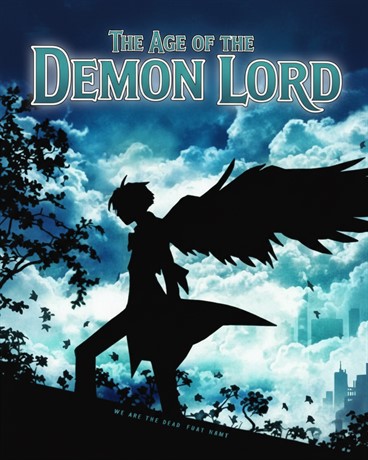
He closed his eyes; the mood was a night tide, and silence held knives. Black Cursed Wings unfurled behind him, feathers like obsidian notebooks. Black lightning stitched the air, pitch-dark fire flowed out like ink from a wound. “I curse this land,” he said, voice like frost on steel. “I curse it to teem with wraiths and swarm with monsters. All life here will wither, like fields under a burning moon… unless… the Divine Bloom falls. Only when the crimson flower, shed by a fallen god, drifts down upon this soil will everything return to its first shape.”
His words were a seal pressed into wax. Black flames lapped outward like tide on a midnight shore, and black lightning webbed the sky like veins in stormglass.
Flowers, grasses, trees—worms, fish, birds, beasts—everything withered at a speed you could see, like time turned to scythes. The earth first touched by black fire charred like bread burned to cinder, every stalk collapsing into ash.
Then the world began to twist. A tree went all-black, sprouting ropes of vine like snakes in a well; a warped face bulged on its trunk like a knot become an eye. No longer rooted, its roots wriggled like legs, squirming, making the tree walk like a blind giant.
A wild boar burned, and its bristles grew long like needles forged by a blacksmith. Each hair was a steel spike thick as a sow, its crimson eyes a pair of coals. Tusks pushed out and curved like sickles, black lightning flickering along them like storm-will-o’-wisps.
The river couldn’t drown the black fire; the flames ate water like oil, and the current turned to ink-black doom, glossy as spilled lacquer. From the river rose fish with two legs, scales black as midnight, bodies wreathed in black fire like garments. Each held a trident condensed from flame, pitch as a grave. Behind them scuttled giant lobsters like armored monks, and crabs puffing black bubbles like dying stars.
Overhead, clouds infected by black lightning blackened like smoke-stained wool. Birds that pierced the clouds twisted and changed: three-headed eagles like war totems, sparrows crackling with black lightning like sparks from anvils, owls riddled with eyes like mosaics of moonstones.
Cursed Wings—once coveted by a “prince” of the Night Clan—could, in theory, inscribe an unbreakable doom, a lock whose key was the death of the starry sky and the end of the universe. But that was theory like a mirage on hot sand. Ouyang couldn’t bear the karma of a universe’s grave; he had to name a condition within his spine’s load. He chose the fall of a god, a blossom plucked from divinity, because here only when both empires emptied their vaults could a god die. Tricky, like a trap hidden in prayer, yet bearable.
Curses, like locks, have limits shaped by what karma the curser can carry, ropes measured before a climb. He couldn’t curse a Primordial Deity into a bug—such weight would crush him like a mountain on a reed. An Ancient God, maybe, if he laid down every card, he could wrestle that storm and not drown.
That’s when he’s complete—when Ouyang’s master persona wakes like the sun over frost. The force of time washed him into sleep, birthing two temporary faces. One kept insisting he’d just crossed over from Earth, a dreamer gripping a paper passport. The other is the one here, hair gray-white like winter grass, eyes like cold rain.
So Litian won’t accept either. To him, the soft Ouyang and the gray-white Ouyang are stopgaps, ghosts wearing his coat, not the true man.
This Ouyang has inherited a slice of the original fire, but right now, cursing a god-level being is the edge of the cliff he can stand on. A curse cuts both ways; the instant you strike it, the method to break it blooms inside the target’s soul like writing on a mirror. If they break it, Ouyang eats that karma like iron in his bread.
Cursing dead things is safer; no hand can lift the lock from a stone. But if someone passes by—a traveler with some sense, a monk with a third eye—they can read the residue like tracks in snow and find a way to undo it. If the passerby keeps walking, the curse sleeps like a snake coiled. If they meddle, if a hand reaches where it shouldn’t, once the curse is broken, Ouyang still takes the bite, bearing that karma like a hunter caught in his own trap.