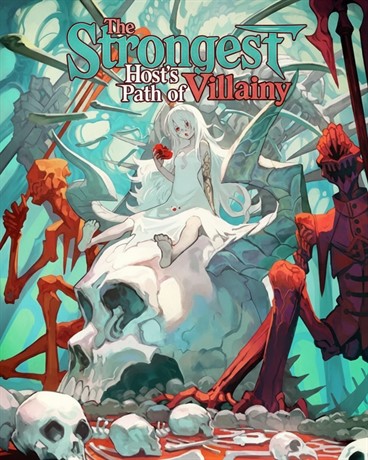
I can’t remember the first day I met Shutong An; in my ink‑washed memory, she was always the quiet shadow at my side.
Unlike the other maids, she was inward as winter water; during training she’d stand alone in a dim corner, like a shy moth hugging the wall.
Father said she was an orphan; a quack fortune‑teller warned him his youthful sins lay like soot on his soul, the rotten fruit to ripen on his children.
He kept the Si Family’s face calm like a lake, yet under that ice he chose “better safe than sorry,” and took Shutong in like a stray in rain.
I had no special interest; to me, her arrival just brushed a stroke of color across a gray childhood, like a lantern staining snow with warm ink.
We truly touched paths when I was seventeen, on a ink‑blue night; I wandered the courtyard sleepless, and a rustle behind me ran like wind through bamboo.
I turned, moonlight clear as water, and saw her drop from a several‑meter railing, a cat’s shadow landing soft on the stone.
“This late, where did you go?” The words leapt like a pebble into a pond; I stood in the courtyard’s heart with the moon hanging like a coin.
She hadn’t expected me awake; her usual polite mask fell like silk, and her face bloomed with awkwardness. “Miss, don’t laugh. I played too long outside and came back late.”
“The front gate was shut, so I had to find another path,” she said, voice thin as a reed in the night wind.
Dust cloaked her like road ash; her torn clothes fluttered like broken leaves, and on the fabric, dried blood sat like rusted plum blossoms.
A knot tightened in me, cold as a hand on a drum; not because she looked so bedraggled, but because instinct said this Shutong wasn’t the one in my mirror.
I couldn’t name the difference; the strings in my chest felt a hair out of tune, as if a still lake had been touched by a hidden oar.
We hadn’t shared much and yet enough; chased by enemies like wolves at our heels, ambushed at a hotel with knives glinting like rain, she stood like a pine.
What she showed me kept peeling at my curiosity like fingertips at lacquer, urging me to see the person under the mask.
Once, she was a maiden still as a lotus; then, somewhere, she lifted her maid’s long skirt like a banner and kicked my pursuers away like a crisp gust.
I admit it stunned me; she fought like she’d flipped a hidden switch, her power prowling like a tiger, outclassing some Si Family bodyguards.
I don’t know when I started watching her; when I woke, my compass needle had already swung to her, my thoughts stringing after her like kites on one thread.
She wasn’t the lonely child anymore; men and women drifted to her like market voices, and jealousy wound around my ribs like a green vine.
Anxiety buzzed like summer cicadas; the thought she might leave one day rolled a storm across my chest and filled my room with fog.
I thought I was sick; the fever sang like a kettle, and I searched the web like a diviner staring into a black pool.
Yes—the word dropped like a pebble into a deep well, sending rings through the dark.
I was in love; a flag rose in my heart like scarlet dawn, and yes, the beloved was a woman too—but what of it?
Gender divides bathhouse doors like painted signs; love runs like a river that ignores fences.
I sat with this feeling like a student before a blank scroll; I tried many ways, but the first step looked like a cliff and my paper boats sank.
After all, it felt one‑sided; I was her direct superior, a thorn‑hedged taboo of master and maid, woman and woman, with acceptance unknown like a sealed letter.
So I cast my net across the night sea of the web, hoping to hook a clear answer from the dark water.
They said young people now ask with a method both reserved and bold; after chewing on it, I chose an acrostic poem, a bridge of letters across a river.
But worry pricked like a needle; though we both grew up inside the Si Family, Shutong’s schooling was thin, a handful of characters like pebbles in a jar.
If she caught it, the moon would be full; if she didn’t, we’d step on a rake and share the bruise.
I decided to test the water with a toe before I tried to cross the stream.
That night, I wrote her an acrostic and sent it like a paper crane; the lines went roughly like this.
“I miss you.”
“Wondering if right now you’re thinking of me.”
“When deep night comes.”
“Your voice is my only echo.”
“Seize my mind.”
“Derail my thoughts.”
It was syrup‑thick and a little illiterate, a kite with a broken tail, but for testing my own maid it was enough.
To give her space, I left a door ajar like a lantern; for once, I slept in my own room to grant her private air to reply.
She didn’t disappoint; at dawn I found a pink‑white envelope by my bed, lying like a petal, and the room held a faint scent like osmanthus.
Excitement burst like fireworks under my ribs; I’d thought she’d wait days, but the night itself had answered, and I slit the envelope like a knife on silk.
Inside, only two short lines, together fewer than fifteen words, brief as a swallow’s tail.
“Silly, I miss you too.”
“More than I miss anyone.”
I suspected she played dumb and scolded me with honey, a fox hiding its tail in flowers; but I had no net to catch proof.
The acrostic sat proper as a seal; I hadn’t told her it was an acrostic, so I had no handle to question, and truth would need time like tea steeping.
Sadly, after that single letter, the line went silent; the itch crawled under silk like an ant and left the mailbox bare as a winter branch.
To be honest, a secret crush is honeyed poison; even as the family’s heiress, I got no special mercy, and sparks snapped under my skin.
Time drifted like smoke; I didn’t want to drag it on, so in another envelope I tossed a pebble at her window: “Want to play acrostics with me?”
Her reply came swift as a swallow; next day, I opened the envelope and found three lines like quick strokes.
“Acrostic?”
“Wait a sec.”
“Almost done.”
“......”
Fine. The curtain had been yanked, and my clumsy probes lay on the table like exposed cards.
She didn’t just spare me; she toyed with me like a cat batting yarn, a cheeky challenge to my heiress banner.
As punishment, I decided to school this unruly maid, like guiding a wild foal back under the bridle with a silk switch.
But heaven likes its jokes; I thought a subordinate would come, bow like a willow, and apologize, yet she didn’t make even a peep.
Rage prowled like a caged tiger; I couldn’t sleep, fists hot as coals, but her strength outweighed mine like a mountain against a feather.
I weighed the scales in my mind and decided to offer her a bamboo bridge down; after all, I’m an heiress, and I can’t haggle over grains of sand.
That night, I slipped into her quilt like a fox into a warm nest, and I whispered comfort to my dignity like smoothing a ruffled fan.
But giving her steps isn’t a road forever; after so much, I ached to be with her, to tie a red string and claim her like a mountain claims a tree.
Yet that rascal offered no gap, a door shut in iron, my hands closing on smoke like a dream.
When online answers dried up like a riverbed, and I was ready to give up, a post flashed like a lantern: “How to catch your crush’s attention.”
It listed tricks of feigning sickness or death, fox‑plays for pity; I read for a long stretch and pulled one thread from the tangle.
To hook sympathy, you must sell misery like a blood‑red bait; unless her heart is winter jade, the hook will set.
But I’m a dignified heiress, a crown heavy as jade; begging a subordinate felt like holding out a beggar’s bowl in the ancestral hall.
After brooding, I chose to make the play real; if the sorrow is true rain, no one can fault the storm.
So when my maid asked about dinner, I picked forbidden shells like cold moons—oysters, my red‑lined taboo.
As expected, I later foamed like tide on black rock, and earned a kiss like stolen spring—really CPR, a damp paper veil between our mouths.
Afterward, my furious subordinate scolded like a north wind; I only curved a smile like a crescent and let silence be my fan.
This world had little to please me, a plain field of ash; then you came like a lantern after snow, and I saw, at last, a rare salvation.