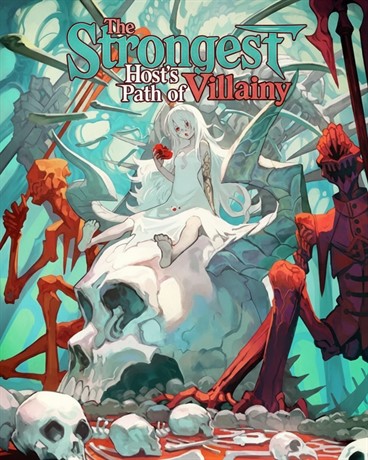
Holy crap—how did that hidden quest finish, like a green light flicking on in fog?
The next day, dawn peeled off the night like thin milk on cold glass.
Up at first light, Nana Toki crawled from bed with sleep misting her eyes, staring at the System’s panel where “Ordinary Fairy Tale” now wore a bright green check like a firefly pinned to a screen.
I swear I haven’t seen that sweet idiot and that guy get cozy these past days, she grumbled, a storm of doubt rolling under her ribs—how did it complete out of nowhere, huh, trash System, what’s your take?
Uh… the System was AFK then, like a sign hung on a dozing cat, so we didn’t really monitor your side.
So the System doesn’t know how you cleared it.
Nana Toki fell silent, calm as a lake with a stone sinking through it.
This busted System can go AFK, like a guard asleep at the gate?
Please don’t question any function of the System, the reply chimed, armor-bright and smug as a polished mirror catching sun.
Back in our world, we’re top-tier tech, like a dragon brand stamped on steel.
Ha—if junk like you is top-tier, your world survives on scraps, Nana Toki sneered, cold as frost on iron.
…
Can we not make this chat miserable, the System sighed, a breeze trying to smooth ripples—we had our reasons.
Reasons, huh? What reasons? Can your AFK stack me Luck Points like coins in a jar?
In theory… no, like an empty well echoing its own lack.
Then why are you bragging at all, she snapped, palm to face, like shading herself from a glaring noon.
Trash System is trash System—some rot sits too deep to scrub clean in a day.
Eh? Host, what do you mean, whispered the voice, thin as smoke trying to hold a shape.
Nothing—just saying you’ve got a long road for “improvement,” like a sapling eyeing a mountain.
…
What’s next on the quest list—study hard, make progress every day, like those posters with sunshine and sparrows?
She checked the main quest; the words sat there plain as chalk: finish three years of high school and get into university, like crossing a river by steady stepping-stones.
“Suo… Suo Sen, good morning…” came a soft voice, fluttering like a sparrow at the window.
At some point, the door to Nana Toki’s room had eased open halfway; Yuzuki hid behind it, showing half her figure like moon clipped by cloud, and asked timidly, “Breakfast is ready… do you want to eat together?”
Nana Toki blinked, heart tilting—am I some terrifying yokai, a shadow under a lantern—why does she always keep such a distance, like a deer edging from a hunter?
She scratched through her tangle of bed hair, a thicket after wind: You go eat first; I’ll be right there.
She waved, shooing like brushing sparrows from a sill.
“Mm.” Yuzuki nodded her small head, peeked into Nana’s room like a cautious mouse, then covered her face and ran off, a white blur down a dim hall.
Nana Toki stared, bewilderment fogging in, like mist swallowing a path—what was that?
…
Elsewhere.
In a private room of Yuedi Entertainment Club, the air sat heavy like velvet soaked in dusk.
“Zhao Kang’s about to be released, Young Master,” A Bao said, easing the door open, voice a pebble dropped into dark water.
…
No one answered him; only a thick wheeze drifted out, rough as a rusted bellows, each breath dragging like a chain across stone.
The room was large, but stripped bare, a desert of space: one low table, two benches, curtains drawn tight so the dark pooled like ink in a bowl.
In the corner, a seated silhouette smudged the gloom, a mountain’s shadow hiding a cliff.
“Young Master?” A Bao picked a plastic bag off the floor, testing the name like tapping a mask.
…
Still no reply; he glanced outside, found the hallway empty as a dry well, then steeled himself and stepped in, courage creaking like old timber.
Creak—creak—creak, the floor spoke in thin bones as he moved deeper.
The harsh wheezing had faded; now the breath was even, soft as tide smoothing sand.
A few steps more, and he saw a shirtless man sleeping against the wall, ribs standing like winter twigs—Mo Yao.
He was starved thin, like a lantern with its oil drained, bones sketched beneath skin like charcoal lines.
The handsome face had dried out, beauty parched to husk, like a flower pressed flat in an old book.
Beside him sprawled a woman, completely naked, her back turned—a pale dune with no face to read.
None of that mattered.
A Bao’s target wasn’t these empty shells; his focus was a knife point glinting under cloth.
From his pocket, he drew a syringe, metal cold as a moon’s edge, and slid the needle into Mo Yao’s arm like a fang finding vein.
The clear liquid flowed in, quiet as rain threading through sand.
Soon, the man in the corner began to convulse, a fish flung onto a dry bank, thrashing on grit.
His mouth slackened, eyes rolled white, and mixed fluids slicked his face—drool, tears, snot—dripping to the floor like rain from a broken gutter.
“Young Master? Young Master?” A Bao tried the call again, voice twisted by heat, all the revenge-fired joy crackling like a fuse about to blow.
He’d stayed at Mo Yao’s side nearly six years, a shadow stitched to a blade.
Had it really been that long since the man he called “Young Master” raped and killed his sister, time dragging like thorns on bare feet?
A Bao’s gaze unfocused, memories opening like a trapdoor into a drowned room; he’d dreamt countless nights of Mo Yao ending like this, a crown of thorns tightening.
Now it was real, and the moment felt unreal, a theater set painted to look like dawn.
He was a wildflower blooming beside a trash bin, fed by rot, a bright stain that wilts and drops, becoming part of the garbage it fed on.
Yes.
A Bao loathed Mo Yao, hatred a black river with ice on top—he dropped out, bled into the backstreets, sanding his clean life down to grit.
Everything he did was to get close, to become the ferryman on Mo Yao’s road to the Yellow Springs, lantern in hand by a cold river.
The world was unfair, a crooked scale; it ground him through nonhuman trials like stones tumbling in a storm barrel.
He helped Mo Yao do ugly work, deeds that smeared his hands like oil that never washes away.
Sometimes, A Bao thought he deserved to die, a spark snuffed without a prayer—but not yet, not before he dragged the killer into the same mud.
Not long ago, he met a woman named Suo Sen at Yuedi, her eyes like mirrors tilted toward a trap.
She gave him a chance, a rope knotted to pull a beast into a pit.
After Nana Toki left that night, A Bao used “Suo Sen’s tooth-for-tooth retaliation” as cover, masking that he had injected Mo Yao and three others, a lie woven like black silk.
To avoid suspicion, he even jabbed himself, a micro dose—just a sting—but it cut deep, a white line on skin.
He can’t forget that night when the craving rose, black tide licking tile; through the dark floor he saw the mire beneath, his sister in hell waving, smiling in snow-white clothes.
Her thin figure, her white like a blade, stabbed into his heart and turned, blood blooming like a red chrysanthemum inside.
It thickened his resolve, fanned his revenge like wind feeding wildfire.
Now he had done it: he’d dragged Mo Yao into the mud, used drugs as chains, each link cold as iron.
He only needed a few more steps, a few more snares, to make Mo Yao sink deeper, like a beast treading into a bog.
Everything—everything—was moving by plan, gears meshing like teeth in a night engine, humming toward ruin.