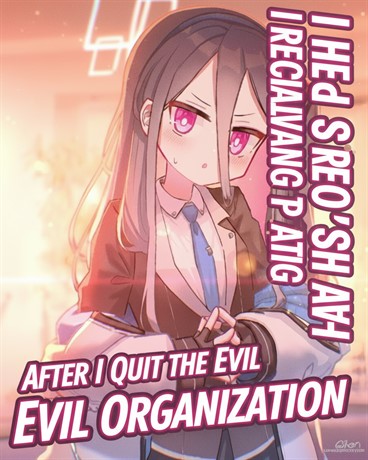
Banxi lay on the seat for a spell, breath thin as frost, then steadied enough to speak. Dorothy offered food, but she kept her lips sealed like a locked cellar. She even refused Yekase’s candy, a stone statue in a storm.
She just stared, eyes like an arrow pinned toward one fixed horizon.
Yekase guessed that was home, a compass pulled by memory. Maybe they’d even see the Icewater Sprites from the Shadow Realm War reports, those creatures painted in miracles. She urged Harrison to drive that way, voice like a tug on the reins.
With one more body, the car felt tight as a packed sled. Yekase wanted the back row to try talking to Banxi, so Lu Yao folded the seats flat like paper into a little room, and the four of them settled in, shoulder to shoulder.
Then the two of them pulled out the reports they’d stolen from the bunker, words like cold sparks across the page, and began to study.
The Shadow Realm War researchers had mapped the Icewater Sprites in minute strokes, their bodies, their ways, even their sorcerous circuits traced like river-veins. It was detailed to a suspicious shine, the kind of shine that smells of knives.
Turned out, the Icewater Sprite was a singular magical lifeform. They lived where winter bit like iron, yet the sorcery leaking from them nursed the land, and little oases budded like green islands torn from the tundra. People called them the Spirits of Winter.
By nature they were gentle, lanterns in a whiteout. They rescued humans and wild beasts lost on the snowfields, and welcomed both those who wished to go home and those who wished to settle in the green.
Yekase’s mind sketched a classic pixie, butterfly wings and bell laughter. Banxi, then, was likely a child taken in by them, a snow-orphan warmed by a hearth.
They had another mark of fate: their lives were brief, one full year and not a day more. In that single ring of seasons, they grew from child to parent in a rush like spring thaw, then held steady until the end.
When they died, the last of their sorcery turned their bodies into ice and snow, and they returned like meltwater to the land that birthed them.
It was that terrain-blind oasis-making, and the trick of turning flesh to frost, that hooked the Shadow Realm War like a fish on a line.
Matter transmutation—one of the oldest questions in Alchemy—glimmered behind it, and it fit the rumor that the true mastermind was Newton. After all, Newton himself wore the alchemist’s cloak, ink stained and star-drunk.
Pull back farther: the program that warped fundamental forces to forge Infinite Power, that built this mad world where ideal and material fly side by side, where super-systems and hard-real systems share one skyline—that first single-rune array, Mana Transmutation—“Moyuanhua”—was transmutation too. Only its target was energy.
They seemed to be after more than a single Golden Apple, more than coin or a crown. They wanted the deep bones of the world. For that, they could pluck lives like weeds.
Too pure in purpose. Almost moving in its cold light.
Yekase looked at them and saw a mirror in winter water—herself without morals or conscience, a researcher unspooling into infinity.
So she knew exactly how frightening that kind of purity could be.
…
Meanwhile, on the other side of the car, Dorothy kept trying to talk to Banxi, voice soft as wool.
“How old are you this year? Are you Inuit?”
“…”
“Why do you live on the icefield? Is there a village nearby? I’d love to see it.”
“…”
“When I was little, my nanny told a story. Far to the north, people lived with dragons. I never bought it. But if fairies can live with humans, then people and dragons doesn’t sound impossible—”
Banxi finally stirred, a ripple under ice. “Humans and dragons.”
“Oh? You know that story too?”
“It’s… a tale we pass down. A story of a human and a dragon… in love. I must… sing it on.”
“In love? That’s so romantic,” Dorothy breathed, eyes like stars against snow.
Yekase’s ears snagged on humans and dragons, and she lifted her head, the report paling like old ash.
“In the far north,” Banxi said, voice gaining weight like an old bell, “war between humans and dragons had raged for a thousand years. Blood layered upon blood, forging chains of hatred that would not break.”
Her tone shifted, time settling around her words like hoarfrost. Her pronunciation smoothed, the ease of someone raised on a song.
“At that time, a human girl and a dragon fell into love.”
“Love at first sight? What about the setup?” Yekase couldn’t help herself, a quick jab in the ribs of the tale. Dorothy shot her a small glare, sharp as a needle.
“The girl came from a branch of the East Slavs,” Banxi went on, “and her beloved was a princess of the Ice Dragon tribe. Two souls meant to drown each other in hate met by chance—and saw one another.”
…
That day, the weather was the same as always, a blizzard chewing the world to bones.
The girl lost her tribe and wandered the endless white, seeking a home like a ghost chasing a lantern.
She knew in her gut that supplies had run dry; she had likely been left, like a lamb at the cliff’s edge. The glint at her mother’s eye last night had already written her fate.
She wasn’t seeking home. She was drifting.
The sky was all wind and snow. The fires of war showed no end. Fate wouldn’t wait long. She’d starve, or freeze, or be taken by dragons and chained. That being so, better to end it with her own hand, quick as a knife.
But she had no blade to kiss a wrist or throat. So she thought, slow and grim, and searched until she found a half-frozen stream, a silver vein under glass.
Follow a stream and you’ll find a lake or the sea. When she reached it, she’d jump. Let the icewater seal her mouth and nose, steal her warmth, and spare her a long, unknowable pain.
She walked, feet like wood, and at last found a lake, black as a pupil.
…But someone was already there.
A woman soaked to the waist, back turned, hair like pale blue silk spilled on stone. Her body was mature, her outline a statue carved in winter.
It felt wrong to die in front of a stranger. Even now, the girl fussed over manners like threads on a shroud, and she turned to leave.
“Hey, you.”
The girl froze, a deer in a white beam.
“Don’t just stand there. Come scrub my back.”
…?
Mistaken identity?
Her skin was smooth as cream, her long hair sleek as waterweed. She looked like a noble’s daughter, a world away from a village girl raised on smoke and bone. A lady like that would bring servants out, surely. Perhaps she’d taken the girl for one.
If so, perhaps there was a way to live…
The girl didn’t question why a lady would bathe in a wild lake. She crept closer, shaking like a thin reed, picked up the towel on the shore, and tried to scrub her back.
“Why so light? Didn’t you eat?” The lady’s voice drifted, then dimmed. “Mm… true. The quartermaster reported yesterday the storehouses are thinning to ribs…”
Her words sank lower, like a ship losing light, and she sighed.
“Will we ever see the end of this war?”
“…?”
“This war has lasted a thousand years. New hatchlings have hatred poured into them by their elders, bitter as brine. They’ve forgotten we were rebels at the start, not conquerors… We’ve gone too far. The war has changed its name.”
What?
New hatchlings? What did that even mean?
Rebels and invaders? How did that cut?
The girl felt something off, a strange slip in the voice, as if the speaker didn’t stand with humans at all… but with dragons.
“Lord Nidhogg took his guards to harry around Sidnia again today. It never ends. Does he truly think those East Slavs, half-starved and half-naked, threaten us? It’s just bloodlust to vent, and he still wraps it in fine words to fool the hatchlings…”
—Wait.
The Slavs of Sidnia—that was her tribe, the fires she’d grown beside for ten whole winters.
Her breath hitched, a fish on dry ground. She wanted to run, but her feet nailed themselves to earth.
“Why’d you stop? Scared?”
“N… no, I…”
This lady—she was a dragon.
The girl realized too late, the world tilting. And this dragon, snug in human shape, had known all along that the girl wasn’t a servant. Just a stray human.
“C-could you… wait until I fall asleep before you eat me?” she asked, voice trembling like a grass blade.
“Why would I eat you?”
“Because… because you’re a dragon…”
“Must a dragon eat people?” The lady frowned, a small cloud crossing the moon. “I worked so hard to wear a human face, and you still think I came to dine on you?”
“I… I didn’t know…”
Dragons were terror, stamped into her bones since childhood. Every time her elders wore stormy faces, it was because dragons had taken the hunting grounds or the hot springs they’d bled to find.
And now a dragon asked her, with cool disdain, why dragons should eat people.
Either the world had gone mad, or she was seeing a mirage before death.
The lady rose from the lake.
Clear water slid off her like a waterfall of glass, baring a clean, strong body, and along the tips of her limbs, faint blue scales shimmered like frost.
“My name is Sindragosa. I’m the one who’ll end this thousand-year war. Knowing I’m a dragon, you still didn’t run at once. Want to try coming with me?”
“I…”
The girl swayed, a candle in a draft. Truth be told, chains of hate and scars of centuries were things she only knew from murmurs around the fire. She had no feel for those ghosts.
But she had one question she knew by heart, a hunger that burned clearer than theology.
“When the war ends… can we eat? Will we have warm clothes?” she asked.
Sindragosa answered with a small smile, pale as dawn.
Then she held out her hand.
“Yes. All of that. We’ll make a new future, one where humans and dragons live in harmony.”
Her eyes were clear as thin ice, blue washing her gaze. Around the dragon’s vertical pupils, the irises flashed like sea-gems, scattering light in a thousand chips.
“In that future…” The girl’s breath caught, entranced.
“In that future, no young girl will wander the snowfields again.”